
Turkey Vulture (Cathartes aura): Fun Facts, Habitat & Conservation
Fun Facts About the Turkey Vulture
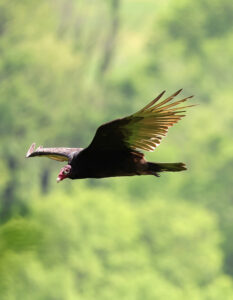
Turkey Vultures are instantly recognizable by their dark plumage, long, broad wings, and distinctive bare red head. Unlike many birds, their featherless head is an important adaptation for their scavenging lifestyle, helping keep them clean while feeding. Seen up close or silhouetted against the sky, their lanky build and serious expression give them a prehistoric, almost otherworldly appearance.
Unlike many birds of prey, Turkey Vultures do not rely on talons to capture live prey. Instead, they are specialized scavengers, feeding almost exclusively on carrion. Their powerful hooked bills are designed for tearing, and their highly acidic stomachs allow them to safely consume decaying material that would be dangerous to most animals.
Turkey Vultures possess an extraordinary sense of smell, a rare trait among birds. They can detect the scent of decaying organic matter from great distances, allowing them to locate food hidden beneath forest canopies or in dense vegetation. This ability sets them apart from other soaring birds that rely primarily on sight.
Their flight style is one of their most distinctive traits. Turkey Vultures soar with wings held in a shallow V-shape, rocking gently from side to side as they ride rising air currents. This effortless, teetering glide makes them easy to identify even at great distances.
During the breeding season, Turkey Vultures do not build traditional nests. Instead, they lay their eggs directly on the ground in sheltered locations such as caves, hollow logs, rocky crevices, or abandoned buildings. Both parents share incubation duties and care for the chicks.
With their soaring presence, unique adaptations, and critical role as nature’s cleanup crew, Turkey Vultures are often considered guardians of ecosystem health. By efficiently removing carcasses from the landscape, they help prevent the spread of disease and quietly maintain balance wherever they roam.
Turkey Vulture Conservation
The Turkey Vulture is currently considered a species of low conservation concern, with widespread and generally stable populations across much of the Americas. Its success is largely due to its highly specialized scavenging lifestyle and remarkable adaptability. Open countryside, forests, deserts, wetlands, and even suburban and agricultural areas all provide suitable habitat, as long as open airspace and food sources are available.
Despite its overall stability, the Turkey Vulture still faces localized threats. Vehicle collisions, poisoning from lead or other toxins in carrion, and habitat disturbance near nesting and roosting sites can negatively impact regional populations. Because they rely so heavily on carrion, changes in land use, road management, and wildlife control practices can indirectly affect food availability.
Because Turkey Vultures are closely tied to ecosystem health, their presence reflects the balance of natural food webs. By efficiently removing carcasses from the landscape, they help limit the spread of disease and recycle nutrients back into the environment. Protecting open habitats, reducing harmful contaminants, and allowing natural ecological processes to function help ensure that this essential scavenger continues to soar across skies and landscapes throughout its range.
Turkey Vulture Apparel & Merch by Bird Fantastic

Turkey Vulture FAQ
What does a Turkey Vulture look like?
The Turkey Vulture is a large, dark bird with long, broad wings and a relatively small head. Adults have blackish-brown plumage and a distinctive bare red head, which helps keep them clean while feeding. In flight, their wings are held in a shallow V-shape, and the undersides appear two-toned with lighter flight feathers.
Where do Turkey Vultures live?
Turkey Vultures are found throughout much of the Americas, from southern Canada through South America. They inhabit a wide range of environments, including open fields, forests, deserts, wetlands, and rural or suburban areas, as long as suitable roosting and soaring conditions are present.
What do Turkey Vultures eat?
Turkey Vultures feed almost entirely on carrion. Their diet consists of dead animals, which they locate using an exceptional sense of smell. This scavenging lifestyle plays a critical role in keeping ecosystems clean and healthy.
Do Turkey Vultures migrate?
Turkey Vultures are partial migrants. Northern populations typically migrate south during winter, while birds in warmer regions may remain in the same area year-round.
How do Turkey Vultures find food?
Unlike most birds, Turkey Vultures have a highly developed sense of smell. They can detect the scent of decaying animals from great distances, even when carcasses are hidden beneath vegetation or forest canopy.
Where do Turkey Vultures nest?
Turkey Vultures do not build traditional nests. Instead, they lay their eggs directly on the ground in sheltered locations such as caves, hollow logs, rocky crevices, or abandoned buildings.
Are Turkey Vultures common?
Yes, Turkey Vultures are widespread across much of their range. Their adaptability and efficient scavenging habits have helped maintain stable populations in many regions.
Are Turkey Vultures important to ecosystems?
Yes. As nature’s cleanup crew, Turkey Vultures help prevent the spread of disease by consuming carcasses. Their role as scavengers makes them an essential part of healthy ecosystems across the landscapes they inhabit.

Bird Fantastic TM | Designed in Pittsburgh