
Red-winged Blackbird (Agelaius phoeniceus): Fun Facts, Habitat & Conservation
Red-winged Blackbird (Agelaius phoeniceus) is one of the most widespread and instantly recognizable songbirds in North America. Famous for the male’s bold red-and-yellow shoulder patches and resonant, liquid song, this species is a defining presence of marshes, wetlands, and open fields. Whether perched atop cattails proclaiming its territory or flashing its colors in flight, the Red-winged Blackbird is a dynamic and vocal bird whose sights and sounds are closely tied to the changing seasons and the return of spring.
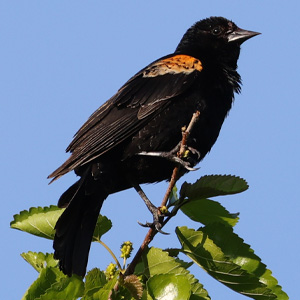
Red-winged Blackbirds are famous for their dramatic sexual dimorphism. Males are glossy black with vivid red shoulder patches edged in yellow, called epaulets, which they flash during courtship and territorial displays. Females look entirely different, streaked brown and sparrow-like, an adaptation that helps them blend into marsh vegetation while nesting.
The male’s song is one of the most recognizable sounds of wetlands and open fields. Often described as a rolling “conk-la-ree!”, it is delivered from prominent perches such as cattails, fence posts, or shrubs. These vocal displays are not just for attracting mates—they are also bold warnings to rivals that a territory is already claimed.
Red-winged Blackbirds are fiercely territorial, especially during breeding season. Males will aggressively chase away intruders, including much larger birds, and even humans who wander too close to a nest. This fearless behavior has made them legendary among birdwatchers and hikers alike.
Unlike many songbirds, Red-winged Blackbirds often practice polygyny, meaning a single male may mate with multiple females within his territory. Each female builds and tends her own nest, usually hidden deep in cattails or marsh grasses, while the male focuses on defending the area.
These birds are highly adaptable feeders. During summer, they consume large numbers of insects, helping control pest populations. In fall and winter, they switch primarily to seeds and grains, sometimes forming enormous mixed flocks with other blackbird species that can number in the thousands.
Red-winged Blackbirds are among the most abundant birds in North America, with populations so large that they are often one of the first species noticed returning in spring. Their presence is closely tied to wetlands and grasslands, making them important indicators of habitat health.
With their bold colors, commanding voices, and unmistakable attitude, Red-winged Blackbirds bring energy and drama to marshes, fields, and roadside ditches, proving that even the most common birds can be endlessly fascinating.
Red-winged Blackbird Conservation
The Red-winged Blackbird is currently considered a species of low conservation concern, with a vast population and one of the widest distributions of any North American songbird. Its success is largely due to its adaptability and ability to thrive in a variety of wetland and open habitats, including marshes, wet meadows, agricultural fields, and roadside ditches. This flexibility has allowed the species to remain common across much of its range.
Despite its overall abundance, Red-winged Blackbirds are closely tied to the health of wetland ecosystems, which face ongoing pressure from drainage, development, and pollution. The loss or degradation of marshes and riparian areas can reduce nesting sites and food availability, particularly during the breeding season when dense vegetation is essential for concealing nests.
Conservation efforts that protect and restore wetlands benefit not only Red-winged Blackbirds but countless other species that share these habitats. Preserving marshlands, maintaining natural water levels, and supporting responsible land management practices help ensure that this iconic bird continues to play its vital role in North America’s wetland landscapes.

Red-winged Blackbird FAQ
What does a Red-winged Blackbird look like?
The Red-winged Blackbird is a medium-sized songbird with big sexual differences. Breeding males are glossy black with bright red shoulder patches edged in yellow, while females are streaked brown with a pale eyebrow and resemble large sparrows. Juveniles look similar to females until males begin developing darker plumage.
Where do Red-winged Blackbirds live?
Red-winged Blackbirds are found across most of North America, especially in marshes, wetlands, wet meadows, and along the edges of lakes and rivers. Outside the breeding season, they are also common in agricultural fields, grasslands, and open countryside.
What do Red-winged Blackbirds eat?
Their diet is highly flexible. During the breeding season, they eat many insects, spiders, and other invertebrates. In fall and winter, they switch primarily to seeds and grains, including grasses and crops.
Do Red-winged Blackbirds migrate?
Red-winged Blackbirds are partial migrants. Northern populations migrate south in winter, while birds in milder regions of the United States often remain year-round. Large winter flocks may include thousands of individuals.
Why are Red-winged Blackbirds so territorial?
Males aggressively defend breeding territories to protect nesting sites and attract multiple mates. Their loud songs and flashing shoulder patches serve as visual and vocal warnings to rivals.
What does a Red-winged Blackbird’s song sound like?
Their song is a rich, rolling series of notes often described as “conk-la-ree,” delivered from exposed perches such as cattails, shrubs, or fence posts.
Are Red-winged Blackbirds common?
Yes, they are among the most abundant bird species in North America, with a large population and wide geographic range.
Are Red-winged Blackbirds important to ecosystems?
Red-winged Blackbirds help control insect populations during the breeding season and play an important role in wetland and grassland ecosystems. Their presence is often an indicator of healthy marsh habitats.

Bird Fantastic TM | Designed in Pittsburgh