
Red-bellied Woodpecker (Melanerpes carolinus): Fun Facts, Habitat & Conservation
Red-bellied Woodpecker (Melanerpes carolinus) is one of the most familiar and energetic woodpeckers in North America. Known for its bold black-and-white barred back, bright red crown and nape, and distinctive rolling calls, this medium-sized woodpecker brings constant motion and sound to forests, parks, and backyard feeders. Agile and curious, the Red-bellied Woodpecker is a year-round presence across much of its range and a favorite among birdwatchers for its striking appearance and lively behavior.
Fun Facts About the Red-bellied Woodpecker
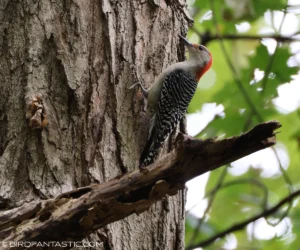
Red-bellied Woodpeckers are instantly recognizable by their bold black-and-white barred backs and bright red caps, which extend from the forehead to the nape in males and are limited to the nape in females. Despite their name, the reddish wash on the belly is often faint and difficult to see. Their striking patterns and upright posture make them easy to spot as they climb tree trunks or perch at feeders.
Unlike many birds that forage delicately, Red-bellied Woodpeckers are powerful and energetic feeders. Using their strong, chisel-like bills, they probe bark, hammer into wood, and explore crevices in search of food. Their long, sticky tongues allow them to extract insects hidden deep within trees, giving them access to resources unavailable to many other birds.
Red-bellied Woodpeckers have a varied and adaptable diet. While insects such as beetles, ants, and caterpillars make up a large portion of their food, they also eat nuts, seeds, fruits, berries, and occasionally small vertebrates. They readily visit backyard feeders for peanuts, suet, and sunflower seeds, making them a familiar presence in suburban settings.
Their behavior is lively and expressive. Red-bellied Woodpeckers are known for their rolling “churr” calls and sharp “kwirr” notes, which carry through woodlands year-round. They also drum loudly on trees, dead limbs, and even man-made structures to communicate and establish territory.
During the breeding season, these woodpeckers excavate nest cavities in dead or decaying trees, often reusing or modifying old holes in subsequent years. Both parents share incubation and chick-rearing duties, and abandoned cavities later provide important nesting and shelter sites for other birds and wildlife.
Active, adaptable, and vocal, Red-bellied Woodpeckers are emblematic birds of eastern forests and wooded neighborhoods. Their constant movement, bold patterns, and unmistakable sounds bring energy and life to the landscapes they inhabit throughout the year.
Red-bellied Woodpecker Conservation
The Red-bellied Woodpecker is currently considered a species of low conservation concern, with populations that are stable or increasing across much of its range in eastern North America. Its success is largely due to its adaptability and broad diet, which includes insects, nuts, seeds, fruits, and food from backyard feeders. Forests, woodlands, swamps, parks, and suburban neighborhoods all provide suitable habitat, allowing the species to thrive in both natural and human-altered environments.
Despite its overall stability, the Red-bellied Woodpecker still depends on healthy woodland ecosystems. The removal of dead and decaying trees can reduce the availability of nesting and roosting sites, while excessive pesticide use may lower insect populations that are especially important during the breeding season. Mature trees and standing snags play a critical role in supporting not only woodpeckers but many other cavity-nesting species.
Because Red-bellied Woodpeckers rely on trees year-round for feeding, nesting, and shelter, they are closely tied to the health of forested and wooded landscapes. Preserving mature trees, maintaining diverse woodlands, and supporting bird-friendly yard practices help ensure that this energetic and familiar woodpecker continues to flourish across its range.
Red-bellied Woodpecker Apparel & Merch by Bird Fantastic

Red-bellied Woodpecker FAQ
What does a Red-bellied Woodpecker look like?
The Red-bellied Woodpecker is a medium-sized woodpecker with a bold black-and-white barred back and pale gray underparts. Males have a bright red cap that extends from the bill to the nape, while females show red only on the back of the head. The reddish wash on the belly is often faint and can be difficult to see.
Where do Red-bellied Woodpeckers live?
Red-bellied Woodpeckers are found throughout much of eastern North America. They inhabit forests, woodlands, swamps, river corridors, parks, and suburban neighborhoods with mature trees.
What do Red-bellied Woodpeckers eat?
They have a varied diet that includes insects, spiders, nuts, seeds, fruits, and berries. Red-bellied Woodpeckers also readily visit backyard feeders for peanuts, sunflower seeds, and suet.
Do Red-bellied Woodpeckers migrate?
Red-bellied Woodpeckers are generally non-migratory. Most individuals remain in the same area year-round, though some may make short seasonal movements in response to food availability.
Where do Red-bellied Woodpeckers nest?
They nest in tree cavities that they excavate themselves, usually in dead or decaying trees. Both males and females help dig the cavity and care for the eggs and chicks.
What does a Red-bellied Woodpecker’s call sound like?
Their most common call is a rolling, raspy “churr” or “kwirr” sound. They also drum loudly on trees and other surfaces as a form of communication, especially during the breeding season.
Are Red-bellied Woodpeckers common?
Yes, Red-bellied Woodpeckers are widespread across their range, with populations that are stable or increasing in many areas.
Are Red-bellied Woodpeckers important to ecosystems?
Red-bellied Woodpeckers help control insect populations and create nesting cavities that are later used by other birds and wildlife. Their presence is an important indicator of healthy, tree-rich habitats.

Bird Fantastic TM | Designed in Pittsburgh