
American Goldfinch (Spinus tristis): Fun Facts, Habitat & Conservation
American Goldfinch (Spinus tristis) is one of the most recognizable and beloved songbirds in North America. Known for its bright yellow breeding plumage and cheerful, undulating flight, this small finch brings color and motion to fields, gardens, and backyards. With its lively personality and distinctive calls, the American Goldfinch is a familiar presence throughout much of the year and a favorite among birdwatchers.
Fun Facts About the American Goldfinch
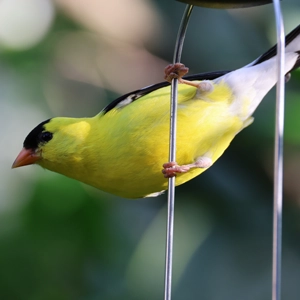
American Goldfinches are instantly recognizable during the breeding season, when males transform into brilliant flashes of yellow accented by a black cap and black-and-white wings. Females and nonbreeding birds wear softer tones of olive and brown, offering excellent camouflage among grasses and shrubs. This seasonal color change is one of the most dramatic plumage shifts seen in North American songbirds.
Unlike many birds that nest in spring, American Goldfinches are late-season breeders. They typically wait until midsummer to begin nesting, timing reproduction to coincide with peak availability of seeds. This strategy ensures a reliable food source for raising chicks and sets them apart from most other backyard birds.
American Goldfinches are strict seed specialists. Their conical bills are perfectly adapted for extracting seeds from plants like thistle, sunflower, and dandelion. They are one of the few birds able to cling acrobatically to seed heads, often hanging upside down while feeding.
Their flight pattern is distinctive and easy to spot. American Goldfinches fly in a rolling, wave-like motion, rising and falling as they travel between feeding areas. This flight style is often accompanied by their cheerful, whistled calls, giving them a lively, almost playful presence in the air.
During the winter months, American Goldfinches become highly social. They form loose flocks that roam the landscape together, visiting feeders and weedy fields in search of seeds. These flocks help them locate food efficiently and provide safety in numbers during harsher conditions.
With their bright colors, seed-loving habits, and year-round activity, American Goldfinches are often considered ambassadors of open fields, meadows, and backyard habitats, bringing life and movement wherever they appear.
American Goldfinch Conservation
The American Goldfinch is currently considered a species of low conservation concern, with stable populations across much of North America. Its success is largely due to its adaptability and its strong reliance on seed-producing plants rather than insects alone. Open fields, meadows, forest edges, and even suburban gardens provide suitable habitat, allowing the species to thrive in both natural and human-altered landscapes.
Despite its overall stability, the American Goldfinch still benefits from thoughtful land and garden management. The loss of native meadows, widespread use of herbicides, and the removal of seed-bearing plants can reduce food availability, especially outside the breeding season. Native wildflowers, grasses, and winter seed sources are particularly important for sustaining healthy populations.
Because American Goldfinches depend heavily on seeds throughout the year, they are closely tied to the health of open ecosystems. Maintaining diverse plant communities, preserving natural field habitats, and supporting bird-friendly gardening practices help ensure that this bright and familiar songbird continues to flourish across its range.
American Goldfinch Apparel & Merch by Bird Fantastic


American Goldfinch FAQ
What does an American Goldfinch look like?
The American Goldfinch is a small finch with a compact body and a short, notched tail. Breeding males are bright yellow with a black forehead and black wings marked with white bars. Females and winter birds are more subdued, showing olive-brown tones with lighter underparts.
Where do American Goldfinches live?
American Goldfinches are found across much of North America, inhabiting open fields, meadows, grasslands, forest edges, and suburban areas. They are especially common in places with abundant seed-producing plants.
What do American Goldfinches eat?
American Goldfinches feed almost entirely on seeds. Their diet includes thistle, sunflower, dandelion, grasses, and other native plants. They rarely eat insects, even during the breeding season.
Do American Goldfinches migrate?
American Goldfinches are partial migrants. Northern populations often move south during winter, while birds in milder climates may remain in the same area year-round.
Why do American Goldfinches breed later than other birds?
They breed later in the summer to align nesting with peak seed availability. This timing ensures that both adults and chicks have access to the food they rely on most.
What does an American Goldfinch’s song sound like?
Their song is a lively mix of warbles and whistles, often delivered in a cheerful, bouncing rhythm. Their flight call is a distinctive “per-chick-o-ree” sound commonly heard as they fly overhead.
Are American Goldfinches common?
Yes, American Goldfinches are one of the most widespread and abundant finches in North America, particularly in open and suburban landscapes.
Are American Goldfinches important to ecosystems?
By feeding on seeds, American Goldfinches play a role in seed dispersal and help shape plant communities in open habitats. They are also a key species in backyard bird ecosystems.

Bird Fantastic TM | Designed in Pittsburgh