
Abbott’s Babbler (Malacocincla abbotti): Fun Facts, Habitat & Conservation
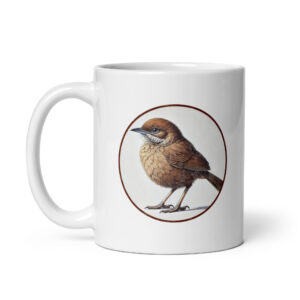
Abbott’s Babbler (Malacocincla abbotti) is a secretive and ground-dwelling songbird of South and Southeast Asia, known for its warm brown plumage, bold eye stripe, and rich, bubbling calls that echo through dense undergrowth. Often heard more than seen, this elusive babbler thrives in forest floors, bamboo thickets, and tangled vegetation, where it forages quietly among leaf litter. With its shy nature and beautifully complex voice, Abbott’s Babbler is a captivating example of the hidden life within tropical forests.
Fun Facts About the Abbott's Babbler
Abbott's Babbler Conservation
The Abbott’s Babbler is currently considered a species of conservation concern, with populations declining across much of its range in South and Southeast Asia. Its vulnerability is closely tied to its strong dependence on dense, undisturbed forest undergrowth, where it forages quietly near the ground. Unlike adaptable generalist birds, Abbott’s Babbler is highly specialized, making it more sensitive to habitat disturbance and environmental change.
The primary threat to Abbott’s Babbler is habitat loss and fragmentation, driven by deforestation, agricultural expansion, logging, and infrastructure development. The clearing of lowland and foothill forests reduces the thick leaf litter and tangled understory that the species relies on for feeding, nesting, and protection from predators. Even selective logging can significantly degrade suitable habitat by opening the forest floor and altering microclimates.
Because Abbott’s Babbler depends so strongly on intact forest ecosystems, its survival is closely linked to forest conservation efforts. Protecting remaining tracts of primary and mature secondary forest, maintaining continuous understory vegetation, and supporting sustainable land-use practices are essential for stabilizing populations. Preserving healthy forest habitats not only benefits Abbott’s Babbler but also supports a wide range of other understory birds and wildlife that share its environment.
Abbott's Babbler Apparel & Merch by Bird Fantastic

Abbott's Babbler FAQ
What does Abbott’s Babbler look like?
Abbott’s Babbler is a medium-sized, secretive songbird with warm brown upperparts, a paler buffy underside, and a noticeably long tail. It has a strong bill and a subtle facial pattern, giving it a plain but sturdy appearance that blends well with dense forest undergrowth.
Where do Abbott’s Babblers live?
Abbott’s Babblers are found in South and Southeast Asia, inhabiting lowland and foothill forests. They prefer dense undergrowth in tropical and subtropical forests, including evergreen and secondary forests with thick leaf litter.
What do Abbott’s Babblers eat?
Their diet consists mainly of insects and other small invertebrates, which they search for on or near the forest floor. They forage quietly among leaf litter, fallen branches, and tangled vegetation.
Do Abbott’s Babblers migrate?
No. Abbott’s Babblers are non-migratory and remain within the same general area year-round, relying on stable forest habitats for survival.
Why are Abbott’s Babblers so difficult to see?
They are extremely shy and ground-oriented, spending most of their time hidden in dense vegetation. Although often heard calling, they rarely venture into the open, making visual sightings challenging even for experienced birdwatchers.
What does an Abbott’s Babbler’s song sound like?
Its song is a loud, distinctive series of whistles and notes that carry well through dense forest. Despite the bird’s secretive nature, its vocalizations often reveal its presence long before it is seen.
Are Abbott’s Babblers common?
Abbott’s Babblers are locally uncommon and declining in many parts of their range due to habitat loss. While they may be found regularly in intact forests, they disappear quickly from disturbed areas.
Are Abbott’s Babblers important to ecosystems?
Yes. By feeding on insects within the forest understory, Abbott’s Babblers help regulate invertebrate populations and serve as indicators of healthy, undisturbed forest ecosystems. Their presence often reflects the overall condition of the forest floor habitat.

Bird Fantastic TM | Designed in Pittsburgh