
Blue Jay (Cyanocitta cristata): Fun Facts, Habitat & Conservation
Blue Jay (Cyanocitta cristata) is one of North America’s most recognizable and charismatic birds. With its striking blue plumage, bold crest, and loud, expressive calls, this intelligent jay is a familiar presence in forests, parks, and backyards. Known for its curiosity and complex social behavior, the Blue Jay is both admired for its beauty and respected for its sharp mind.
Fun Facts About the Blue Jay
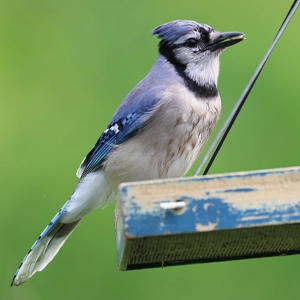
Blue Jays are instantly recognizable thanks to their vibrant blue feathers, white underparts, and distinctive black markings around the face and neck. Interestingly, their blue color isn’t caused by pigment but by light scattering within the feather structure, making their coloration appear especially vivid in sunlight.
Highly intelligent and adaptable, Blue Jays belong to the corvid family, which also includes crows and ravens. They are known for strong problem-solving skills, excellent memory, and complex social behavior. Blue Jays frequently cache food such as acorns, remembering hundreds of hiding spots and helping forests regenerate in the process.
Blue Jays are skilled vocalists with an impressive range of sounds. In addition to their familiar loud “jay-jay” calls, they can produce whistles, rattles, and even mimic the calls of hawks. This mimicry may help warn other birds of danger or scare competitors away from food sources.
Despite their bold reputation, Blue Jays are also cautious and observant. They often act as early warning systems in the forest, loudly alerting other animals when predators are nearby. Their presence can change the behavior of many other birds in the area.
During migration seasons, Blue Jays display mysterious behavior. While some migrate long distances, others remain year-round, and scientists are still studying why certain individuals migrate while others stay put. This unpredictability adds to the intrigue surrounding this striking bird.
Blue Jay Conservation
The Blue Jay is currently considered a species of low conservation concern, with stable populations across much of North America. Its adaptability to different habitats, including suburban and urban areas, has helped it thrive despite changes to natural landscapes. However, the preservation of healthy forests and mature trees remains important for nesting, feeding, and migration. By supporting native tree species and maintaining wooded habitats, people can help ensure that Blue Jays continue to flourish as a vibrant and vocal part of North America’s birdlife.
Blue Jay Apparel & Merch by Bird Fantastic



Blue Jay FAQ
What does a Blue Jay look like?
The Blue Jay is a medium-sized bird with bright blue upperparts, white underparts, and black markings forming a necklace around the neck. It has a prominent crest that can be raised or lowered depending on mood and alertness.
Where do Blue Jays live?
Blue Jays are found throughout eastern and central North America. They inhabit forests, woodland edges, city parks, and suburban neighborhoods with mature trees.
What do Blue Jays eat?
Blue Jays have an omnivorous diet that includes nuts, seeds, fruit, insects, and occasionally small animals. Acorns are a favorite food, and Blue Jays play an important role in spreading oak trees by caching them.
Do Blue Jays migrate?
Some Blue Jays migrate while others remain year-round. Migration patterns vary widely, and the reasons why some individuals migrate and others do not are still not fully understood.
Are Blue Jays aggressive?
Blue Jays can be assertive and territorial, especially around food sources or nesting areas. While they may chase away other birds, this behavior is part of their natural survival strategy rather than true aggression.
What does a Blue Jay’s call sound like?
Blue Jays are loud and vocal birds. Their calls include sharp “jay-jay” sounds, whistles, and a variety of rattles. They are also known for mimicking hawk calls.
Are Blue Jays intelligent?
Yes, Blue Jays are considered highly intelligent. They can solve problems, use memory to store food, and adapt quickly to new environments.
Are Blue Jays common?
Yes, Blue Jays are widespread throughout much of their range, especially in areas with trees and access to food.

Bird Fantastic TM | Designed in Pittsburgh