
American Crow (Corvus brachyrhynchos): Fun Facts, Habitat & Conservation
American Crow (Corvus brachyrhynchos) is one of the smartest and most adaptable birds in North America. With its glossy black feathers and unmistakable “caw,” this clever corvid thrives in cities, forests, and everywhere in between. Known for its problem-solving skills and playful personality, the American Crow is as mysterious as it is fascinating.
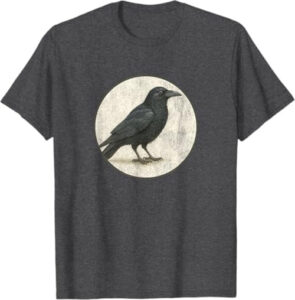
Fun Facts About the American Crow
American Crows are striking in their own way, cloaked in glossy black feathers that shimmer with hints of blue and violet when caught by the sun. Their strong, purposeful stride and alert posture give them an air of intelligence that’s impossible to miss. Males and females look nearly identical, both sharing that sleek, iridescent plumage and a sturdy, all‑black bill that adds to their bold, enigmatic presence.
Crows are among the most vocal and expressive birds in North America. Their calls range from the familiar cawing that echoes across fields and neighborhoods to softer clicks, rattles, and murmurs used in close communication. These sounds aren’t random noise, they’re part of a sophisticated language that helps maintain social bonds, warn of danger, and coordinate group activities.
Highly adaptable and remarkably clever, American Crows thrive in forests, farmlands, suburbs, and bustling cityscapes. They forage with curiosity and skill, eating everything from insects and seeds to fruit, nuts, and the occasional treat scavenged from human spaces. Their problem‑solving abilities are legendary, and they’ve been observed using tools, caching food, and even recognizing individual human faces.
During the breeding season, crows form tight‑knit family groups. Young from previous years often stay to help their parents raise new chicks, bringing food to the nest and standing guard against predators. This cooperative lifestyle gives crow families a strong, almost communal feel, with generations working together to ensure the success of the group.
With their sharp minds, strong family ties, and ability to thrive alongside people, American Crows have become symbols of intelligence, resilience, and mystery.
American Crow Conservation
The American Crow is currently considered a species of low conservation concern, with widespread and generally stable populations across much of North America. Its success is largely due to its exceptional intelligence, adaptability, and highly flexible diet. American Crows thrive in a wide variety of habitats, including forests, farmland, grasslands, cities, suburbs, and even densely populated urban centers, allowing them to coexist closely with human activity.
Despite its overall stability, the American Crow can be affected by environmental pressures. Disease outbreaks such as West Nile virus have caused localized population declines in the past, and habitat changes that reduce tree cover or nesting opportunities can impact breeding success. In some areas, persecution and conflict with humans, often related to agriculture or urban concerns, can also influence local populations.
Because American Crows rely on diverse landscapes that provide food, nesting sites, and communal roosting areas, they are closely tied to the health of mixed ecosystems. Preserving mature trees, maintaining green spaces, and supporting balanced land management practices help ensure that this highly intelligent and adaptable bird continues to thrive across its extensive range.
American Crow Apparel & Merch by Bird Fantastic


American Crow FAQ
What does an American Crow look like?
The American Crow is a large, all-black bird with a stout body, long legs, and a thick, straight bill. Its feathers often show a glossy sheen in sunlight, and its fan-shaped tail is visible in flight.
Where do American Crows live?
American Crows are found throughout most of North America. They inhabit forests, open fields, farmland, parks, suburbs, and cities, thriving in both natural and human-dominated landscapes.
What do American Crows eat?
American Crows are omnivorous and highly opportunistic. Their diet includes insects, small animals, carrion, seeds, grains, fruit, eggs, and human food scraps, allowing them to adapt to many environments.
Do American Crows migrate?
American Crows are partial migrants. Northern populations often move south in winter, while birds in milder regions may remain in the same area year-round.
Where do American Crows nest?
They build large stick nests high in trees, often near the trunk. Family groups may stay together year-round, with young birds sometimes helping parents raise future broods.
What does an American Crow’s call sound like?
Their most familiar call is a loud, harsh “caw,” but American Crows produce a wide variety of vocalizations, including clicks, rattles, and softer notes used for complex communication.
Are American Crows common?
Yes, American Crows are widespread and abundant across their range, especially in areas with mixed habitats and human presence.
Are American Crows important to ecosystems?
American Crows help control insect populations, clean up carrion, and disperse seeds. Their intelligence and adaptability make them a key species in many ecosystems, both natural and urban.

Bird Fantastic TM | Designed in Pittsburgh